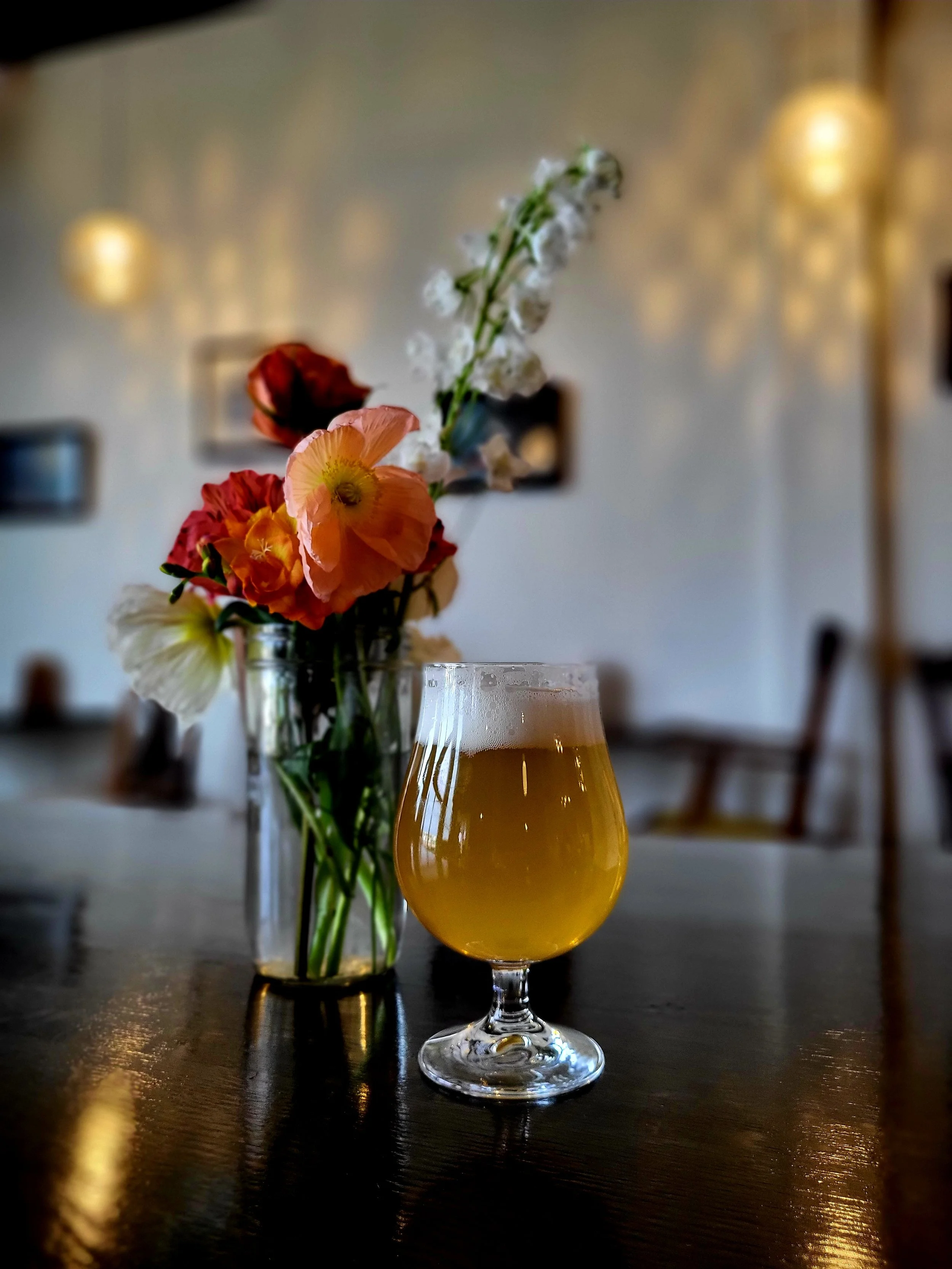
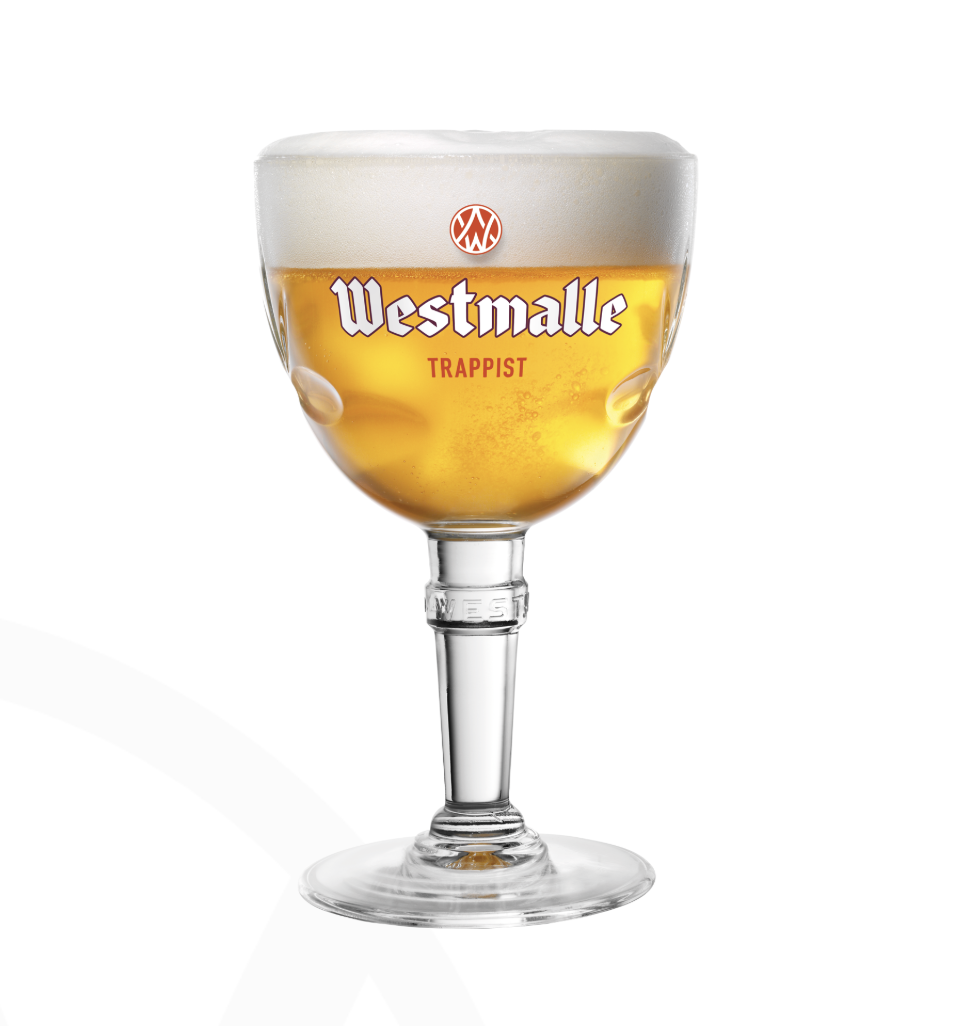
We’re also a Belgian beer bar.

Belgium is home to one of the richest brewing traditions in the world.

From Trappist monasteries and abbey breweries to farmhouse ales and historic city brews, Belgian beer reflects centuries of craftsmanship, experimentation, and local culture.

At Good Cheer Brewing we curate a selection of classic Belgian beers alongside our own historically inspired brews. Each beer tells a story: of monks and merchants, local brewing traditions, and style-defining innovations. Explore the story behind the Belgian beers we carry to discover where they come from and why they have become some of the most beloved ales in the world.

Beers on Tap

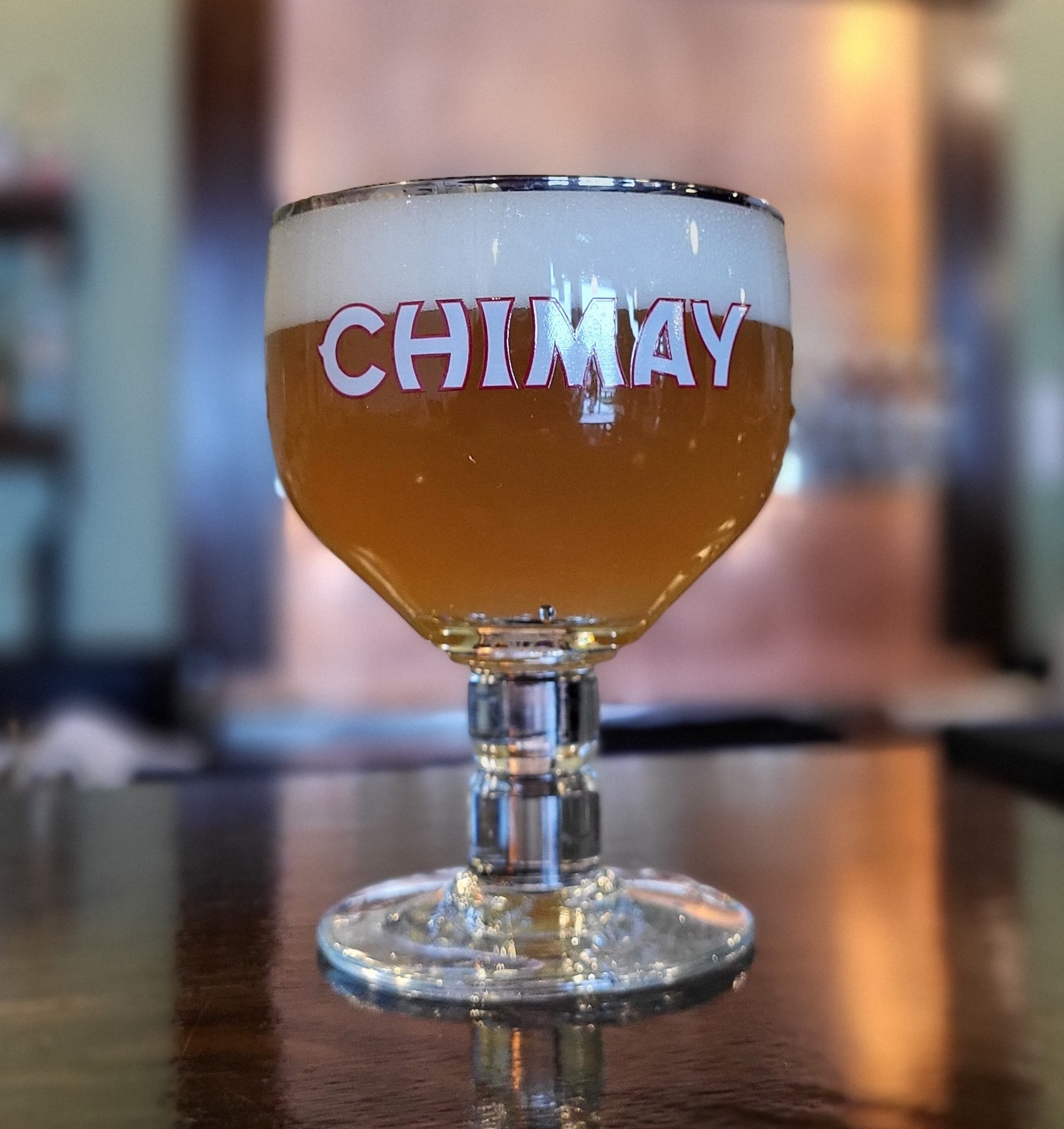
A glass of Chimay beer with a foamy head next to a Chimay beer bottle with a blue label on a white background.

Chimay Blue - Abbaye de Notre Dame de Scourmont, Chimay, Belgium

Chimay Blue is one of the most famous Trappist beers ever brewed. The monks at Notre Dame de Scourmont began brewing in 1862, 12 years after the founding of their abbey. They brewed until WWII when the Nazi occupiers confiscated their copper brewing tanks so that the metal could be used for electrical cables. After the war the monks re-built their brewery, but larger and more sophisticated than before. They launched a commercial brand called Chimay in 1948. The monks created Chimay Blue 1956 as a special Christmas beer and it quickly became the brewery’s most celebrated offering. It is now available year-round, is a certified Trappist beer, and a global icon of Belgian brewing.

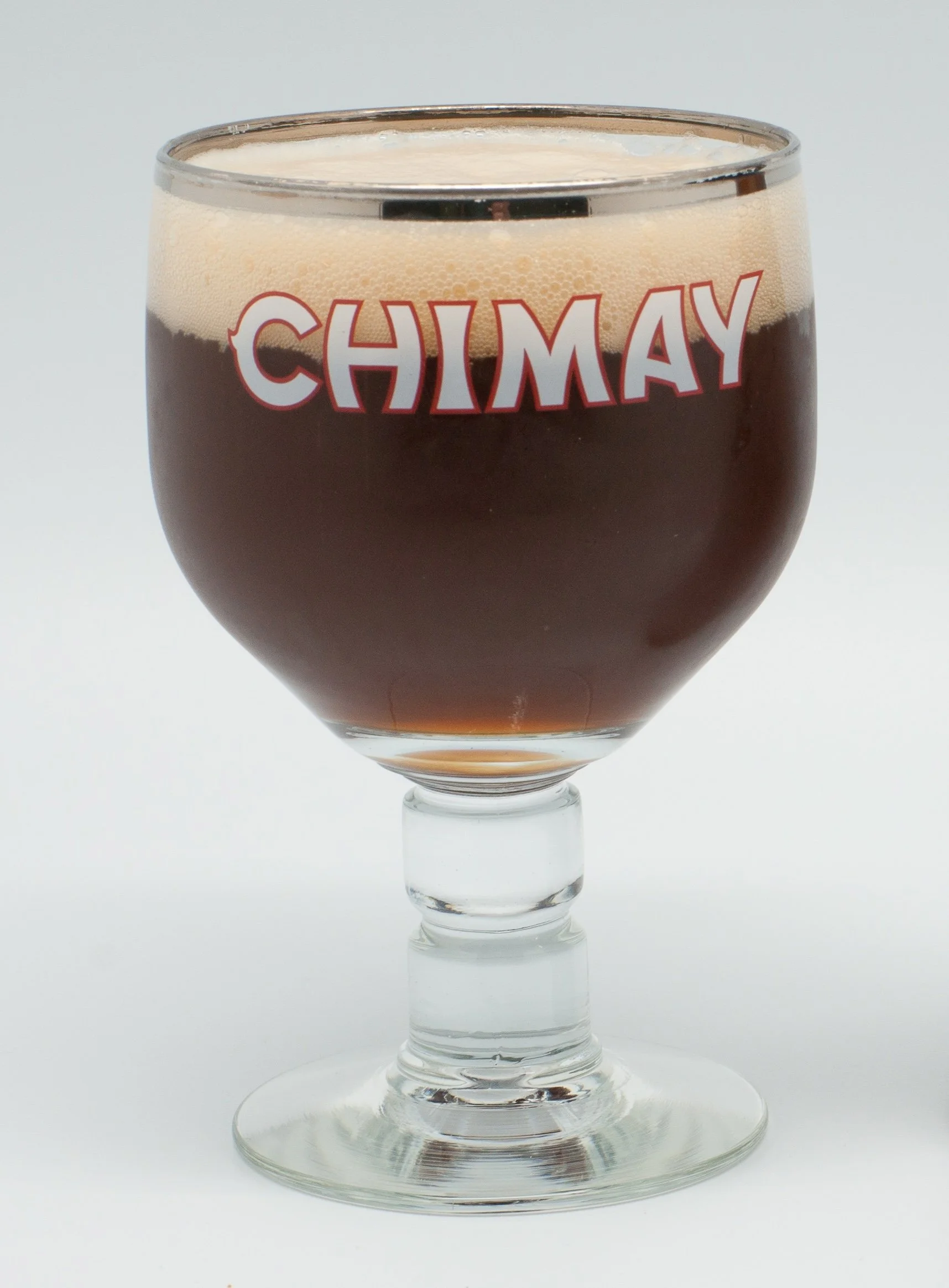
This Belgian Quadruple is prized for its depth and ability to age gracefully for many years. It’s rich, dark, and contemplative - changing in the glass as it warms up and loses carbonation.
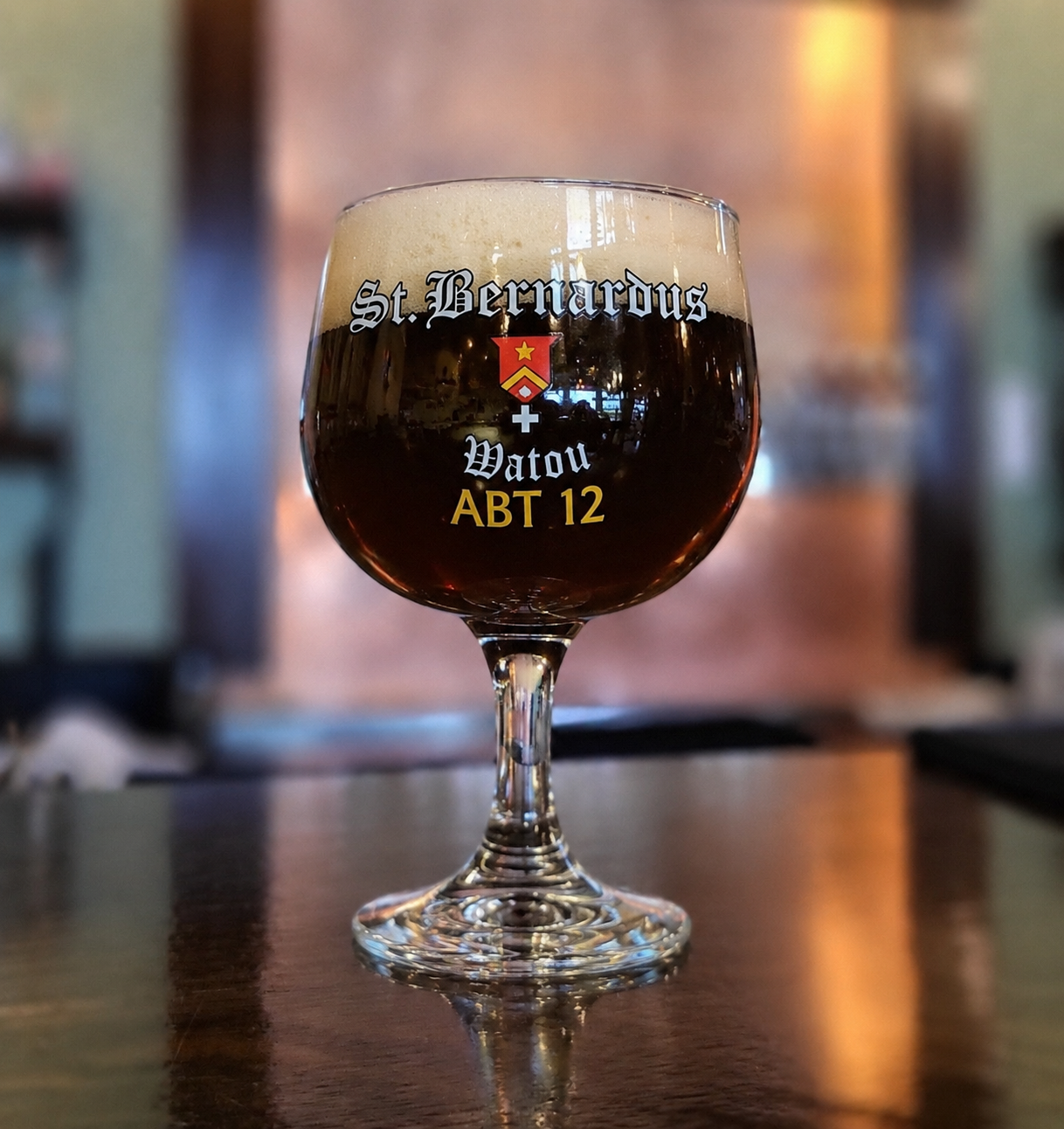
A beer label for St. Bernardus Abt 12, a Belgian beer, featuring a cartoon monk holding a glass of dark beer, with blue, yellow, and black text.

St. Bernardus ABT 12 - Watou, West Flanders, Belgium

St. Bernardus ABT 12 is one of the world’s most revered Belgian abbey-style quadruples. Its roots lie in the brewing traditions of the nearby Trappist monks of St. Sixtus Abbey at Westvleteren. Westvleteren recipes were brewed under license at the St. Bernardus brewery from 1946 to 1992, when the rules for Trappist beers forced the monks at St. Sixtus Abbey to brew entirely within their own walls.

Even though production of the official Westvleteren quadruple moved to St. Sixtus Abbey and re-branded as Westvleteren XII, St. Bernardus continued producing its ABT 12 beer using the same traditional methods. Today it is widely regarded as one of the finest examples of the rich, dark quadrupel style. Westvleterenn XII is only available at the St. Sixtus Abbey and anyone purchasing the beer is limited to three cases and must swear to not sell it commercially.

Full-bodied and complex, St. Bernardus ABT 12 is known for its deep mahogany colour and layers of dark fruit, caramel, and spice. For many beer enthusiasts around the world, ABT 12 stands alongside the great Trappist beers like Chimay Blue and Westvleteren XII as one of Belgium’s most prestigious and sought-after ales.
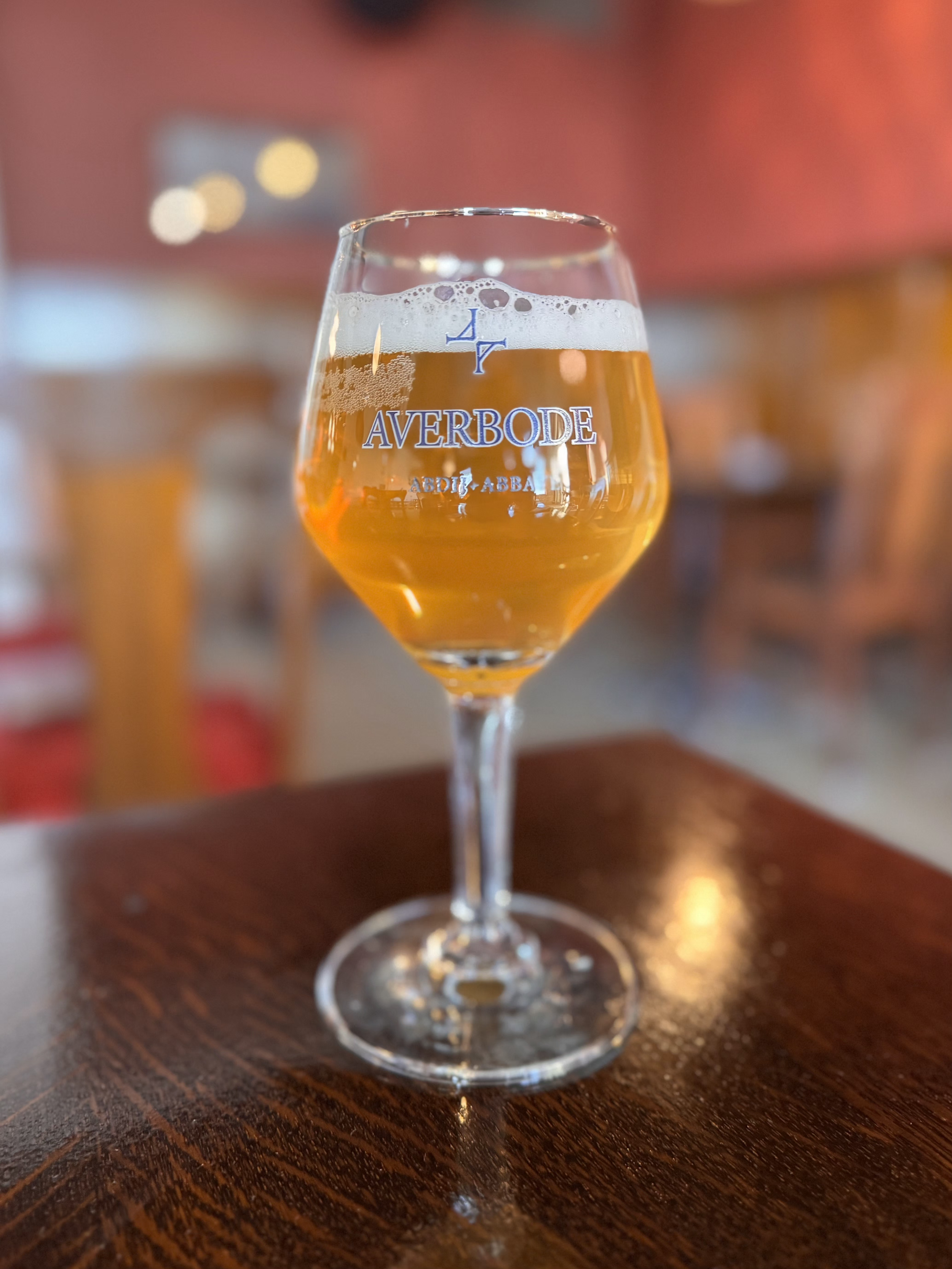
A glass of beer on a wooden table with the logo 'AVERBODE' printed on it, with a blurred background of a bar or restaurant setting.

Averbode - Melle, East Flanders, Belgium

Averbode is the result of a collaboration between Norbertine Abbey of Averbode, a monastery founded in 1134, and Brouwerij Huyghe, a famous Belgian family brewery founded in 1906. Averbode Abbey has played a role in Belgian brewing for centuries and was destroyed and rebuilt several times through wars and political upheaval. It produced beer until 1796, when the French Revolutionary Government captured what was then the Austrian Netherlands. The French government expelled the monks from their abbey and confiscated their property. The monks returned in 1802 but no longer produced beer.

The modern Averbode beer is from 2014, reviving a long tradition of monastic brewing that connects Belgian history with contemporary Belgian brewers. This Belgian Golden Ale balances soft malt sweetness with gentle bitterness and a touch of spice from traditional Belgian yeast. Notes of honey, citrus, and light herbal hops give it a bright, elegant character that reflects the refinement of Belgium’s monastic brewing tradition.

Label for Flemish art of brewing featuring Duchess of Bourgogne, 6.2% alcohol, with an image of a woman in renaissance attire holding a bird, against a dark background.

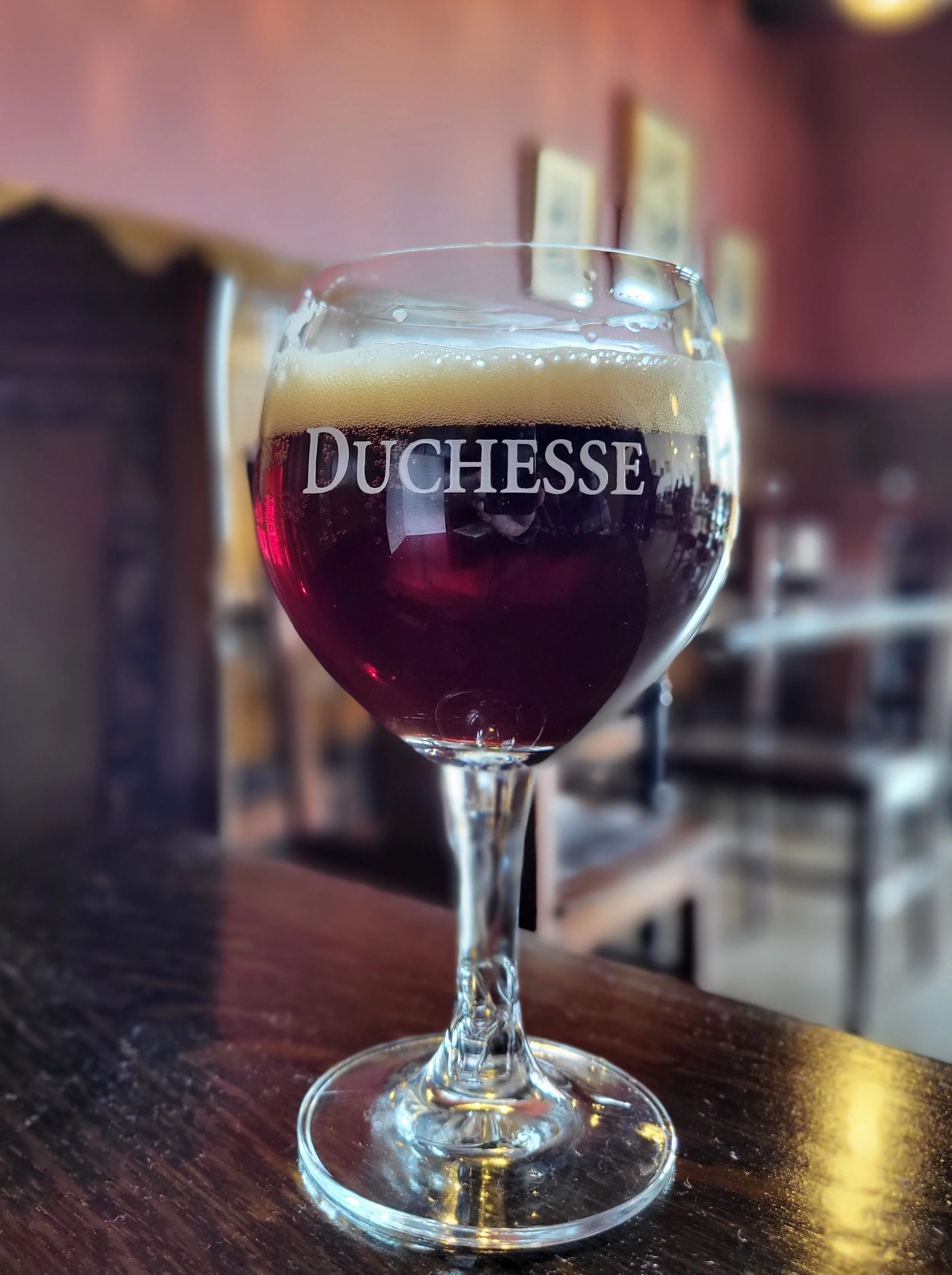
Duchesse de Bourgogne — Roeselare, West Flanders, Belgium

Named after Mary of Burgundy, a fifteenth-century duchess who ruled the region, Duchesse de Bourgogne is a classic example of historic sour Belgian beers and is a living expression of a style that goes back centuries. Duchesse de Bourgogne is one of the most celebrated examples of a mixed-fermentation Flemish red ale, a historic style from the Flanders region of Belgium. Brewed by the family-owned Verhaeghe brewery in Roeselare (founded 1885), this beer reflects a regional tradition that dates back to the 17th and 18th centuries, when brewers matured beer in large oak vats (called foeders) to develop complexity and character.

During its long aging in oak, the beer undergoes slow mixed fermentation that produces layers of fruit, caramel, and acidity. In contrast to modern sour beers that use lactic acid producing bacteria to create acidity overnight, Duchesse de Bourgogne is fermented with acetic acid bacteria for a year and a half, producing a much more complex sourness with vinous, balsamic, and enhanced malt character.

A dark beer bottle next to a glass of amber beer with foam on top.

Beers in Bottles

Orval – Abbaye Notre-Dame d’Orval, Villers-devant-Orval, Belgium

Orval is one of the most distinctive Trappist beers ever brewed and one of the most unusual beers in the Belgian tradition. The abbey at Orval traces its origins to the 12th century, when Cistercian monks established a monastery in the remote forests of southern Belgium. The abbey was destroyed during the French Revolution in 1793 and remained in ruins for more than a century before Trappist monks returned to rebuild it in the early 1900s.

The modern brewery was established in 1931 to help fund the reconstruction of the abbey and the monastic community that had settled there. Unlike most Trappist breweries, Orval produces only a single commercial beer. Brewed with pale malts and dry-hopped with aromatic hops, the beer undergoes a secondary fermentation in the bottle with Brettanomyces yeast, giving it the distinctive earthy and slightly wild character that has made Orval famous.

The beer’s famous label depicts a trout holding a golden ring in its mouth, referencing the medieval legend behind the name “Orval,” meaning “Golden Valley.” According to the story, Countess Mathilde of Tuscany lost her wedding ring in a spring while travelling through the valley. When she prayed for its return, a trout emerged from the water with the ring in its mouth. Taking this as a sign of divine favour, she founded the abbey at the site. The fish and ring remain the symbol of Orval to this day.

This Belgian Trappist ale is prized for its complexity and evolution over time. When young it is bright and hop-forward, with notes of citrus and fresh herbs. With age it develops the dry, leathery, and rustic flavours that have made Orval a cult classic among beer lovers around the world.

Cantillon (assorted styles) – Brasserie Cantillon, Brussels, Belgium

Cantillon is one of the most revered and sought-after lambic breweries in the world. Founded in 1900 in Brussels, it is one of the last traditional lambic breweries still operating in the Senne Valley, where beers are fermented not with cultured yeast but with wild microorganisms from the surrounding air. While hundreds of lambic breweries once existed in the region, Cantillon survived the twentieth century by preserving these ancient brewing methods. Today the brewery also serves as the Brussels Museum of Gueuze, dedicated to protecting this historic style.

Because Cantillon brews slowly and only in the spring and summer, ages its beers for years in oak barrels, and refuses to industrialize production, its beers are released in very limited quantities and are prized by beer enthusiasts around the world. Cantillon’s beers are among the most collectible and celebrated in the beer world. They can age for up to thirty years and are a rare chance to taste one of Belgium’s oldest and most distinctive brewing traditions.

We carry these beers as we can get them, and currently have six that represent several expressions of the lambic tradition.

Gueuze
A blend of young and aged lambics that undergo a second fermentation in the bottle. Bright, dry, and effervescent, with sharp acidity and earthy complexity.

Gueuze 100% Lambic Bio
An organic version of Cantillon’s classic gueuze, brewed with organically grown barley and wheat and showing the brewery’s signature balance of citrus, funk, and lively carbonation.

Grand Cru Bruocsella
An unblended lambic aged for several years in oak barrels. Still and wine-like, revealing deep notes of lemon, oak, and cellar character.

Cuvée Saint-Gilloise
A dry-hopped lambic named after the nearby municipality of Saint-Gilles, adding herbal and citrus aromatics to the beer’s tart, rustic backbone.

Rosé de Gambrinus
A raspberry lambic that combines bright fruit character with the earthy complexity of spontaneous fermentation.

Kriek 100% Lambic
A traditional cherry lambic made with whole sour cherries added to aging barrels, producing a vibrant balance of tart fruit and wild fermentation character.

La Trappe Quadrupel – Abdij Koningshoeven, Berkel-Enschot, Netherlands

La Trappe Quadrupel is one of the most influential strong dark ales in the Trappist tradition. It is brewed at Abdij Koningshoeven in the Netherlands, where Trappist monks have produced beer since 1884 to support the life of the monastery and its charitable work. While many abbey-style beers are inspired by monastic brewing, La Trappe remains one of the small number of breweries officially permitted to carry the Authentic Trappist Product designation, meaning the beer is brewed within the walls of the monastery under the supervision of the monks.

La Trappe introduced its Quadrupel in 1991, reviving and popularizing the term for a rich, powerful dark Trappist ale. Deep amber-brown in colour, the beer is known for its layered flavours of caramelized sugar, dried fruit, figs, dates, and warming spice from the monastery’s house yeast. Strong yet remarkably smooth, it is a contemplative beer that rewards slow drinking and continues to develop complexity as it warms in the glass.