
The Beer Never Changed. You did.
We understand the world through stories, and we like stories with heroes.
The earliest recorded tales in Western civilisation, the Iliad and the Odyssey, are filled with them. So are most of the tales that followed. We tell stories not only about gods and warriors, but about history, science, and even our own lives. It's only natural that when we learn about discovery, we imagine a march of progress illuminated by brilliant individuals.
Only history doesn’t work that way.
Discovery isn’t about thinking a brand-new thought. It’s about seeing something from a different perspective.
Have a look at this image and decide what’s in it.
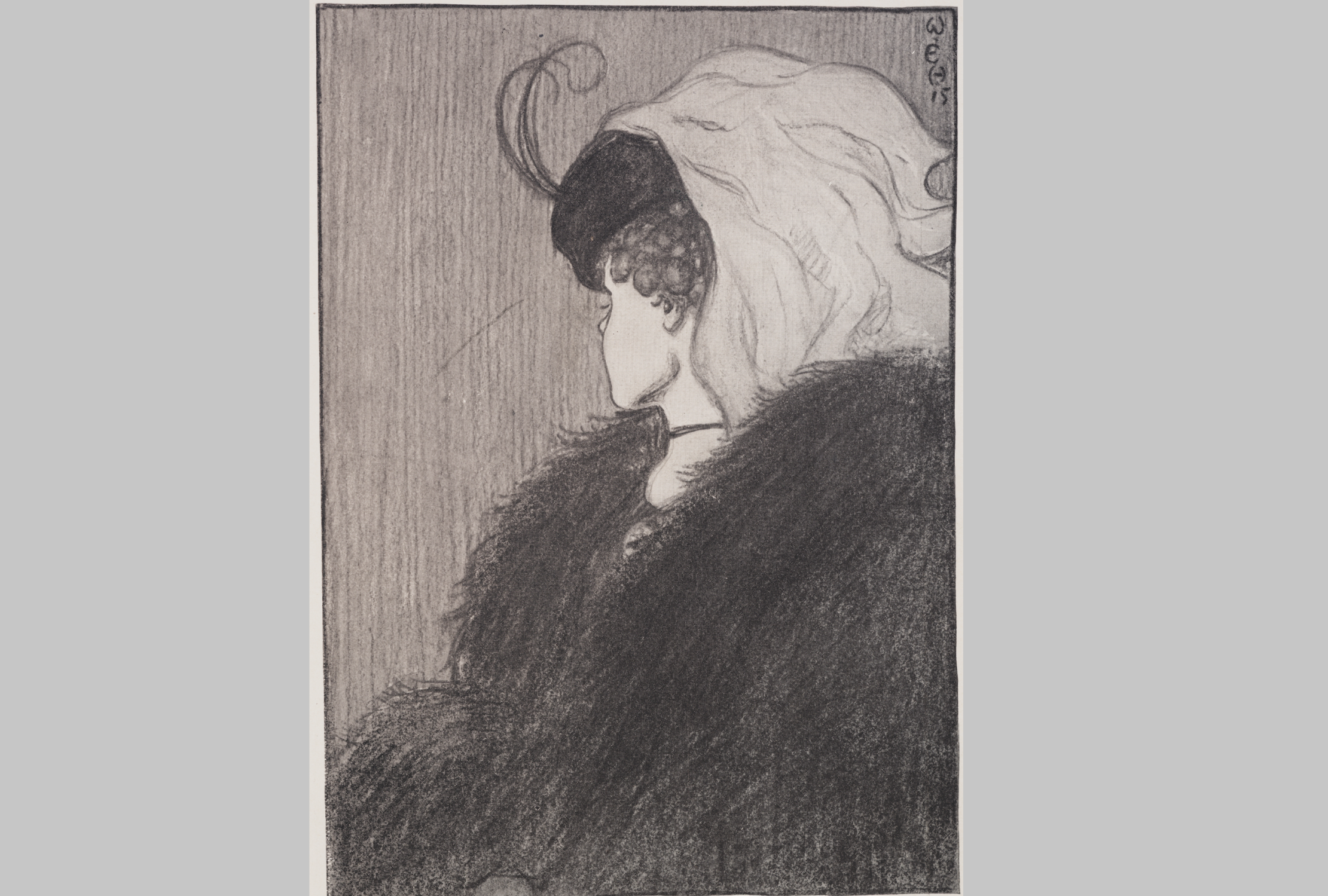
“My Wife and My Mother-in-Law” by W. E. Hill, 1915
Do you see a haggard old woman with a big nose looking straight ahead, or a beautiful young woman with a necklace looking away?
You might call this an illusion, but it’s not. It’s pixels on a screen representing charcoal on paper. You brought the illusion to it.
We don't simply see the world and understand it for what it is; understanding is a story we tell ourselves to make sense of what we perceive.
If we were to sip the same beer, you and I would taste different things. The receptors in our noses and tongues have different sensitivities, and our brains perceive those signals in different ways.
Perception is the process of generating predictions about reality and comparing those predictions against what our senses detect. What we experience is not reality itself, but our brain's best attempt to explain it. Our consciousness doesn’t experience the beer itself. It experiences our interpretation of it. We've had the same beer, but not the same experience.
In that sense, perception is a controlled hallucination. Our minds are constantly at work constructing meaning from a stream of chemical and electrical signals, weaving them into a coherent narrative about the world around us.
Want to try this out? Gather a few friends, ask someone to pour a range of mystery beers into identical glasses, close your eyes, and try to identify the styles. You'll be surprised how much of what you think you're tasting comes from what you expect to taste.
So what’s real?
The world beyond our stories.
We never encounter it directly, but it is the thing our stories are trying to explain.
Some explanations prove more useful than others because reality stubbornly refuses to behave according to the wrong ones.
Before we knew that yeast was a microorganism, society believed it was a quasi-magical substance and that praying (in Western Europe) or screaming (in Scandinavia) when it was added to fresh wort would help stop beer from spoiling.
That doesn’t work.
Beer is chemistry. Understanding how different substances react with one another, and with yeast, is the key to consistent, tasty batches. But first we need to know what those substances actually are.
We got there slowly, as generations of scientists brought different experiences and perspectives to the same questions.
The result was discovery. And discovery isn’t just learning a new fact. It’s like seeing the young woman after you’ve seen the old one.
The image didn’t change.
You did.
And brewing began to change with a new way of seeing the world that emerged during the late 1700s.
Imagine a grand Georgian country house in the English countryside. It’s the year 1774. From where you're standing in the garden you can see, just over the manicured hedges, ivy climbing bright stone walls before stopping at the weathered grey roof.
Inside, bathed in the autumn light, a man is hunched over a table covered with curious instruments. Presently, he’s focusing sunlight through a large magnifying lens, heating a red powder in a glass vessel. A mysterious gas begins to accumulate within as the powder glows hotter.
The man is Joseph Priestley. He’s running an experiment to see if he can isolate a new kind of air. And he’s about to contribute to a chain of discoveries that will change the way we understand everything from brewing to medicine to materials science.
Priestley wasn't a brewer, and he wasn't trying to improve fermentation. Yet the mystery sitting in that glass vessel was part of the same world that brewers struggled to understand. Both brewers and chemists were surrounded by invisible forces they could observe but not explain. Brewers watched wort become beer and then sometimes spoil. Chemists watched metals burn and air change. In both cases, the challenge was the same: how do you understand something you cannot see?
Before those questions could be answered, scientists first had to understand what air actually was.
Like the scientists of his day, Priestley believed that fire was the result of a material releasing a substance they called phlogiston. If the air became saturated with it, any fire would go out because whatever was burning could no longer release its phlogiston into the surrounding atmosphere.
In his famous experiment, Priestley heated what was then called Mercurius calcinatus per se. Today we call it mercuric oxide. When he collected the gas it released, he found that candles burned brilliantly in it. Mice lived longer in it. And he felt great when he breathed it himself.
What did he conclude? He must have produced dephlogisticated air. But what he had actually produced was oxygen.
He had no idea.
In fact, Priestley believed his experiment confirmed phlogiston theory. A few years later, in Paris, Priestley told another scientist, Antoine Lavoisier, about his experiment. He claimed it was proof that phlogiston existed.
Lavoisier was a man obsessed with precise measurement, and Priestley’s experiment bothered him. If burning things released phlogiston, then why was metal heavier after it was burned?
Lavoisier repeated Priestley’s experiment, but added a twist. He heated mercury in a sealed vessel until it slowly turned into a red powder. At the same time, he noticed that part of the air inside the vessel disappeared. When he focused a burning lens on the powder, it turned back into silvery droplets of mercury and released the same mysterious gas Priestley had observed.
The air wasn’t filling with phlogiston when things burned. Something in the air was combining with the burning material.
Lavoisier would identify this as the “eminently respirable” part of air in 1777.
We now call it oxygen, and in 1789 Lavoisier would publish a treatise based on this discovery that would help launch the field of modern chemistry.
For brewers, oxygen would eventually prove to be both friend and enemy. It helps yeast multiply at the start of fermentation, yet it also causes finished beer to stale. What had once been an invisible force became a measurable substance that could be understood and controlled.
But when, where, and by whom was oxygen discovered? By Priestley in England in 1774, Lavoisier in France in 1777, or in 1789 when Lavoisier published his treatise? Or was it someone else entirely, like Carl Wilhelm Scheele in 1771 (calling it fire air) or John Mayow in 1670 (nitro-aerial spirit), or any experimenter who heated mercuric oxide and pondered the gas released?
Oxygen wasn't discovered in a moment. It was observed, here and there, until the concept of oxygen gradually emerged as scientists learned to see the world differently. The same goes for modern brewing.
For thousands of years, brewers worked with invisible forces they could not explain. Grain became sugar. Yeast transformed that sugar into alcohol. Beer soured, aged, and went off for reasons nobody understood.
As scientists gradually identified the substances hidden within air, water, malt, and yeast, brewing transformed from a collection of mysteries into a series of chemical and biological processes that could be understood, measured, and controlled.
Where medieval brewers saw a mysterious transformation, modern brewers see enzymes, microorganisms, esters, alcohols, and acids.
The ingredients never changed.
The beer never changed.
We did.
The dawn of modern brewing was not the invention of something new. It was the discovery of a new concept that illuminated what had been there all along, like the image of the old and young ladies.
Today, when we look into a glass of beer, we see things our ancestors could not: oxygen, enzymes, microorganisms, esters, and acids. This isn’t a result of heroic discoveries, but the gradual emergence of new concepts. The beer is the same.
The story we tell about it is not.
Enjoyed this story? Forward it to one person who loves history, culture, or a good conversation.