
A Cold Ale in Calcutta
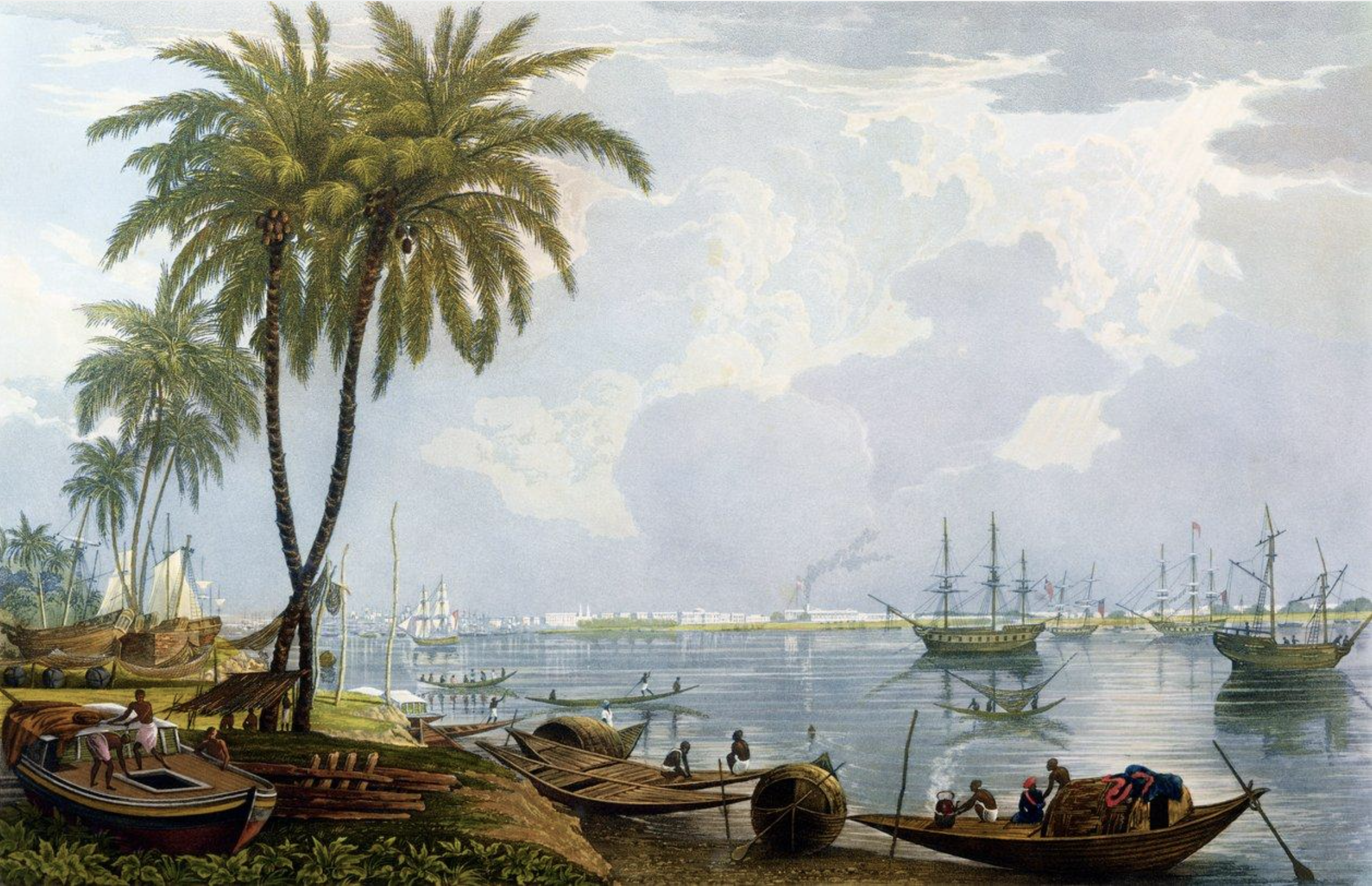
Calcutta Harbour, 1824, Robert Havell the Younger
Dear Reader,
It’s IPA season. The time of year when the original India Pale Ales arrived at docks in India to refresh parched English throats.
Today, I’d like to introduce you to one of the giants in the history of the style. Seventy years after the first IPA appeared on the scene, Samuel Allsopp’s 1823 version would come to dominate the British export market. His brewery would rise with the fortunes of Empire to become synonymous with British pride. We’ll get into that story next week. For now, let’s stretch our imaginations and consider what was it like to be a British expat experiencing this beer for the first time.
This week’s Time Machine transports you back two hundred years to explore why IPA became the flavour of the British experience in India.
Calcutta Harbour, November 1823
Fishermen set out in thick fog against the cold of dawn. They’re wrapped in linen like men risen from the dead. Some row and some steer as their small wooden crafts cut between imposing three-masted merchant ships. The merchantmen, English, Chinese, American, and Arab, are jockeying for a berth at the quay. Slack water only lasts a moment before the lightning tides of the Hooghly River race back to sea.
The tide starts to ebb as soon as the merchant ships are lashed to the cleats on shore. Their ropes groan and pop as the current grabs the hulls and tries to drag their ancient timbers with it. Anyone who wants to work here had better be good with knots. It would take a longshoreman ten thousand years to afford a fraction of the cargo of just one ship.
The fishermen are nearly out of sight by now. With their sails up you’d have to run flat out along shore to keep up with them. They’ll be back with the tide at day’s end.
“The sun will burn the fog off in an hour,” a middle-aged Englishman tells you. His face is a mix of red, pink, and unhealthy brown spots. “Then it’ll start drawing the moisture out of the ground. The air gets heavy with it. By mid-morning your clothes will be soaked through with sweat. It’ll feel like you’re standing too close to a fire. Any exposed skin will blister and peel, but you’ll get used to it. Find a good hat.”
You look toward the quay. There are thousands of men, all dressed in white. Some are setting ramps against the ships. Most are waiting to unload the cargo. There are hundreds of horses. Each is tied to an empty cart.
“It’s a good thing you’re not a porter,” the Englishman observes without a hint of humour. He points to a row of large canvas tents. “But don’t think your tent will save you. Clerks have died from the heat. Drink lots of water. It’ll make you sick but you’ll get used to that, too.”
The East India Company runs the Asian subcontinent, the jewel of the British Empire, and this is a major port. Ships come here from five continents. India is the centre of a new multicultural global world. But Christ, it’s hot.
“As we near mid-day,” your guide tells you while you both walk toward the row of tents, “You’ll want a Hodgson’s ale. Years ago, ale was bad down here. No bitterness. Sometimes skunked. Then Hodgson came along. He uses so many hops the beer keeps. It even has a nice finish. Dry, clean, delicious, and best of all, cold. There’s a pub over there,” he gestures vaguely to the side, “that uses saltpeter to keep it cool.” You look puzzled so he explains. “There’s some kind of chemical reaction between saltpeter and water that sucks the heat out of things. Makes ale cold on a hot day. What a time to be alive!”
You arrive at your tent and five servants greet you. Your job is to take an inventory of tea that’s come in from Asia and forward it to the proper customers throughout the colony. Your servants are there to help with anything you need. “I’ll be back to take you to the pub around noon” the weathered Englishman replies. “Good luck.”
After a frantic morning of counting, recording, repackaging, labeling, and shipping it’s time for the long mid-day break. Your servants vanish like the morning fog but like the tides, they’ll return. You sit alone for a moment. Something crawls down your neck and you swat it with your hand. It vanishes in a wet splatter. An unusually large bead of sweat. The air is still. You could fan yourself, but that’s too much effort. You lean back in your chair, close your eyes, and think of the cool, damp British Isles. You take a deep breath and your chest feels heavy, or maybe the air is thick.
“Hullo!” You open your eyes. Your host, the blotchy sweaty Englishman from the morning, is back. “Time for a cold one. This is a necessity for your first day in India.” You leave the tent and feel the sun on your bare neck. This isn’t the vague radiant warmth of northern latitudes. It’s like something hot is touching you. It’s uncomfortable.
You’re at the pub in ten minutes. The tables are full but there are a few open seats at the bar in the centre of the room. Your party quickly occupies two. The bar is elegant. Dark wood, copper moulding, gold leaf, and arched shelves. It looks like a miniature version of a grand cathedral covered in liquor bottles.
“Two Hodgson’s ales, please!”
“No Hodgson’s today, mate” the bartender replies. Your host’s complexion quickly turns from bright pink to light pink.
“No Hodgson’s? How is a man supposed to survive in this godforsaken climate with no Hodgson’s? Say, are we to drink Claret? Sherry?”
“Allsopp’s.”
“What the devil is Allsopp’s?”
The bartender smiles. He turns away and takes two imperial pint glasses off the shelf. With one hand on the tap handle and the other holding a glass beneath the swan neck spout of the beer engine, he pumps ale from an unseen cask under the bar. He then carries the two glasses, full to the brim with Allsopp’s ale, to your seat. The golden liquid sloshes as the drinking vessels come to a sudden stop on the bar. Dense white foam spills over the sides and blends with the condensation that’s already formed on the glass.
You pick it up immediately. It’s cold. You raise it to your lips and are hit in the face with an earthy, spicy aroma of English forest in autumn. You take a long draught and the cold liquid rushes over your palate, sparkling on your tongue. It pours down your throat and you can feel the cool hit your stomach. You’re left with a lingering sharp cold bitterness. You’ve forgotten about the heat. Perfection.
Your host, seeing your reaction, takes a sceptical draught of his own as the bartender looks on. His eyes widen. You can relate. He pulls the glass away from his lips after a long drink, lifts it up to eye level and bluntly states, “Allsopp’s bloody ale.” His voice is matter of fact, intoned with an affirmation of undeniable truth; this ale is delicious.
The bartender smiles. “Hodgson’s was delayed. He shipped it with a different carrier. This one came in on the regular run. I never tasted the like of it.”
“It’s better. Cleaner. It’s got what makes Hodgson’s so good, only more of it.”
“Aye.” A man sitting to the other side of you agrees. His glass is half full. Its golden contents are covered by a thin foam that’s left a trail of fine white lacing down the inside of his glass.
“So Hodgson’s not with the Company anymore?”
“No, his grandsons are trying to cut them out. Shipping their own ale for a better price. Word is that Chairman Marjoribanks found a brewer in Burton-on-Trent that would make his own version of Hodgson’s ale. He’s shipping that now, and Lord is it better. Must be the water.”