
The Chuckwagon and the Griddle
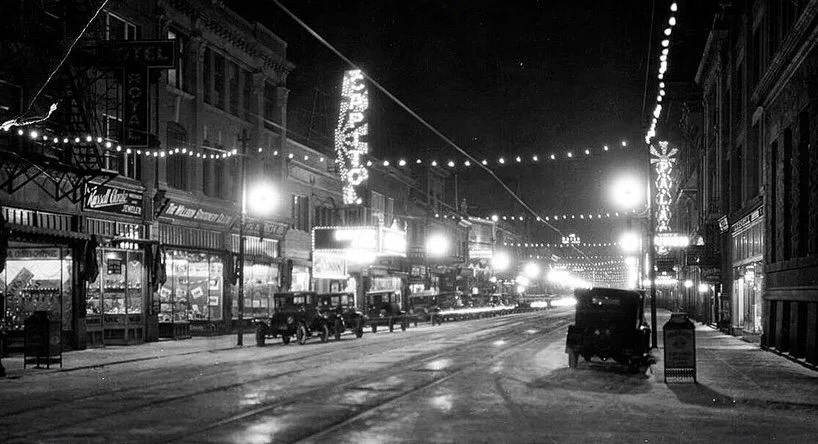
Calgary in the 1920s.
Dear Reader,
The frontier had closed. The railway had transformed the city. Jazz drifted through hotel ballrooms.
Calgary in the 1920s was not just a blend of cultures, but of eras.
Old cowboys who had settled the West rubbed shoulders with young men returned from a war that had ended the age of empires. The battlefields of Vimy Ridge, Ypres, and Passchendaele had forged a new sense of Canadian nationhood. Toronto and Montreal were becoming cosmopolitan cities. Out West, ranch horses still tied up outside storefronts while automobiles rattled down streets that only a generation earlier had been wagon tracks.
Steam locomotives carried businessmen, immigrants, and tourists across the Prairies, bringing new ideas and urban fashions to a city that still smelled of horses and coal smoke.
The First World War had changed more than Europe's borders. It had changed people. The moral certainty that had ushered in Prohibition was beginning to collide with a generation that had crossed oceans, endured the trenches, and returned home determined to live. Dance halls filled. Jazz bands played late into the night. The old rules no longer seemed quite so permanent. Still a proud part of the Commonwealth, Canada was beginning to find its own swagger.
July is a time to celebrate in Canada. Canada Day arrives, school is out, and our brief summer is finally here. In Calgary, that can only mean one thing: Stampede time.
We're joining the celebration with ten days of events, beginning tonight with historian Doug Coates' talk on what Calgary was like in the 1920s. You can see the full schedule below.
And in honour of the Prohibition era that gave us Calgary's iconic Stampede pancake breakfast, this week's Time Machine doesn't begin with a pint. It begins with a griddle.
The Chuckwagon and the Griddle
They came clattering down 8th Avenue. Horseshoes, harnesses, and iron rims of wagon wheels crushing gravel into dust.
The chuckwagon stopped. A man climbed down, stretched ropes into the outlines of a makeshift corral, and piled hay in a corner.
Once the horses were at ease “Wildhorse” Jack Morton set a cast iron camp stove upon the earth. He kindled a fire and heated a griddle. Smoke wafted into the dusty morning air.
Butter hissed. Coffee bubbled in a tin pot. Children drifted toward the sound. Then ranchmen in dusty boots and businessmen in pressed suits.
Wildhorse and his team started flipping pancakes and offering them to passers-by. With maple syrup, too. A small line formed. People shared the food, the fire, the feeling.
That generous spirit still echoes off Calgary's old brick buildings today. Every year since Wildhorse handed out his first pancakes on a Friday morning in July 1923, churches, community groups, and businesses across the city have gathered neighbours and strangers alike around the griddle.
This year, we’re adding one more griddle to the city.
On Wednesday, July 8, we're hosting a free pancake breakfast at the brewery, tucked into historic Ramsay. We'll gather between the red-brick Ramsay Design Centre (1919) and the Snowden Building (1907). We have a few more festivities, some for the public and some just for you, dear readers (and your friends).