
The Little Wolf That Conquered the World
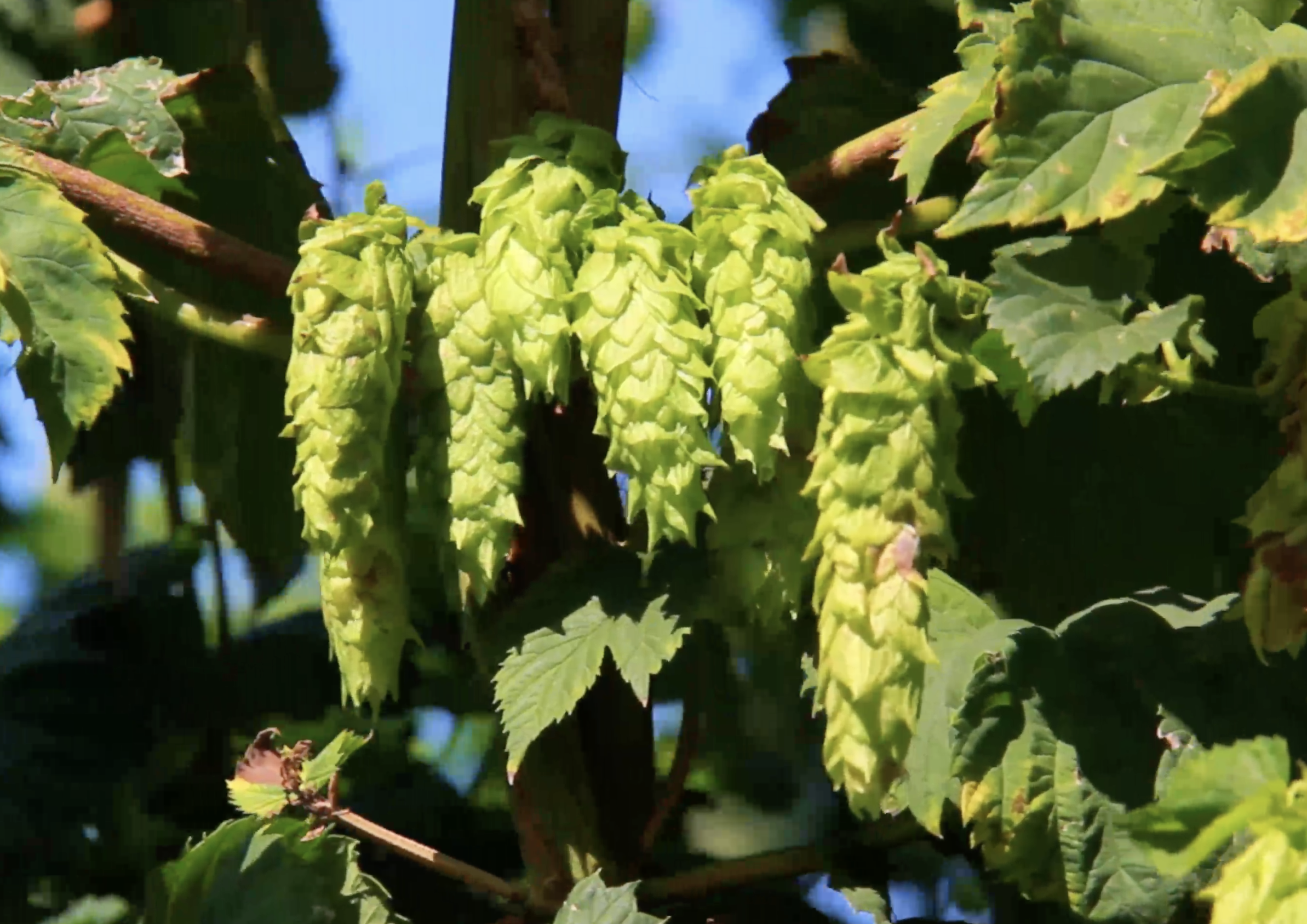
A pack of willow wolves.
And then there is the willow wolf, whose winding, choking growth is as destructive to the willow as a wolf is to sheep.
— Pliny the Elder, Natural History, 77 AD
Pliny the Elder's vivid description of hops as a little wolf (lupulus) is still preserved nearly two thousand years later in the scientific name for hops: Humulus lupulus. The Roman historian noticed this aggressive vine growing up to eight metres (twenty-six feet) in length by winding its tough, barbed twine around anything growing nearby. Willows, it seems, were common prey.
How a plant with such a predatory name came to be known by the comparatively humble name "hop" is unclear. The word may derive from an early term for hopped beer or from the Anglo-Saxon hoppan, meaning "to climb." But no one knows for certain.
We do know that people enjoyed beer for thousands of years before they started adding hops to it.
Specifically, hop flowers.
The hop vine is useful for making rope, but it is the flower, with its delicate, aromatic yellow powder, that makes the plant a critical ingredient in modern beer. The Romans had little use for these bitter flowers and it wasn't until centuries after Pliny's death that they began to appear in the historical brewing record.
The story of hops as a beer ingredient begins in 822, when Bishop Adelhard of Corbie Monastery in modern-day Amiens, France recorded hops as an ingredient in beer. It is the first known written reference to hopped brewing.
From there, hops crept from the shadows of obscurity into the brew kettles of central Europe until, like the aggressive wolf vine, they choked out competing flavourings and eventually wrapped the entire brewing world in their embrace.
Before brewers began using hops they flavoured ale with a mixture of herbs called gruit. This could include anything from spruce buds to bog myrtle, juniper, or heather. These herbs contributed flavour, helped preserve the ale, and were believed to make it more nutritious.
Ale was until recently considered a healthy drink capable of "balancing the humours" and restoring health. Historical recipes promised everything from increased energy to relief from sickness and general malaise. One recipe containing sage, wormwood, and even horseradish was described in 1736 as:
"Very proper for People of gross fat Constitutions, whose Glands are apt to be loaded with tough clammy humors."
That beer was said to be especially effective when taken in the morning.
The theory that illness resulted from an imbalance of the four humours (blood, phlegm, yellow bile, and black bile) was developed by the Greek physician Hippocrates around 400 BC. By the ninth century, it was spreading across Europe through the efforts of scholars working under Charlemagne's Carolingian Empire around the year 800 AD.
The eighth and ninth centuries were an age of intellectual exchange. Monks translated Classical Greek works into Latin while also introducing ideas from the Islamic world. Scholars across Europe became increasingly interested in medicine, natural history, and agriculture.
Bishop Adelhard may have encountered the work of the Arab-Christian physician Yuhanna ibn Masawaih, who praised hops for their antibacterial properties, digestive benefits, and ability to promote sleep. Even if he had not, many other Islamic scholars were writing about the medicinal value of hops and their work was circulating widely.
At the same time, hop gardens (humlonaria) began appearing throughout Europe.
Whether hops were already a common ingredient in gruit mixtures or only used occasionally is impossible to know. Most everyday records were written on ordinary paper, which rarely survived. Vellum, the durable writing material made from calfskin that preserves so much medieval history, was too valuable for everyday notes and recipes.
The earliest clear evidence for the regular use of hops in brewing comes from the twelfth century from the Benedictine abbess, and future saint, Hildegard von Bingen. Hildegard produced one of the Middle Ages' most important medical and botanical texts, Physica, in 1158. It contains the first known description of hops being used to preserve beer.
Hildegard recognised something brewers had missed: Hops preserved beer.
Before hops, brewers who wanted beer to last had to produce stronger ale. This required more grain, incurred more tax, and consumed more firewood. Hops changed the economics of brewing. A brewer could produce a beer with a longer shelf life without dramatically increasing its alcohol content.
It was a revolutionary discovery. Hops made economic sense. Then, once technology permitted the production of large copper kettles, hops became an economic necessity.
Beginning in the thirteenth century, batches at monastic and commercial breweries began to scale from one or two hundred litres to thousands. There was more beer than local people could drink.
The export market was born.
The problem with export beer was distance. Beer spoiled. Markets were far away. Every extra day on the road meant greater risk of loss.
Hops changed the equation.
A brewer who used hops could ship beer farther and reach customers who would otherwise be impossible to serve. What began as a medicinal herb had become a commercial advantage.
For thousands of years beer had been local. Now it could travel.
The little wolf vine that Pliny saw strangling willows beside Roman rivers had found a new prey. It wrapped itself around monasteries, merchant guilds, farming communities, and eventually entire economies. As the export market grew, so did the popularity of beer in Europe. The Beer Border, an imaginary line separating wine-loving southern Europe from the beer aficionados in the North, began to move. Bavaria, once wine country, became one of the world’s most famous beer regions. Next, people around the Mediterranean, Africa, Asia and the Americas began drinking hopped beer.
By the end of the Middle Ages, hops were no longer a curiosity and beer wasn’t just for northerners. By the dawn of the Industrial Revolution, the little wolf was no longer stalking willows. It was reshaping agriculture, trade, and drinking culture across the globe.