
I Have a Confession to Make
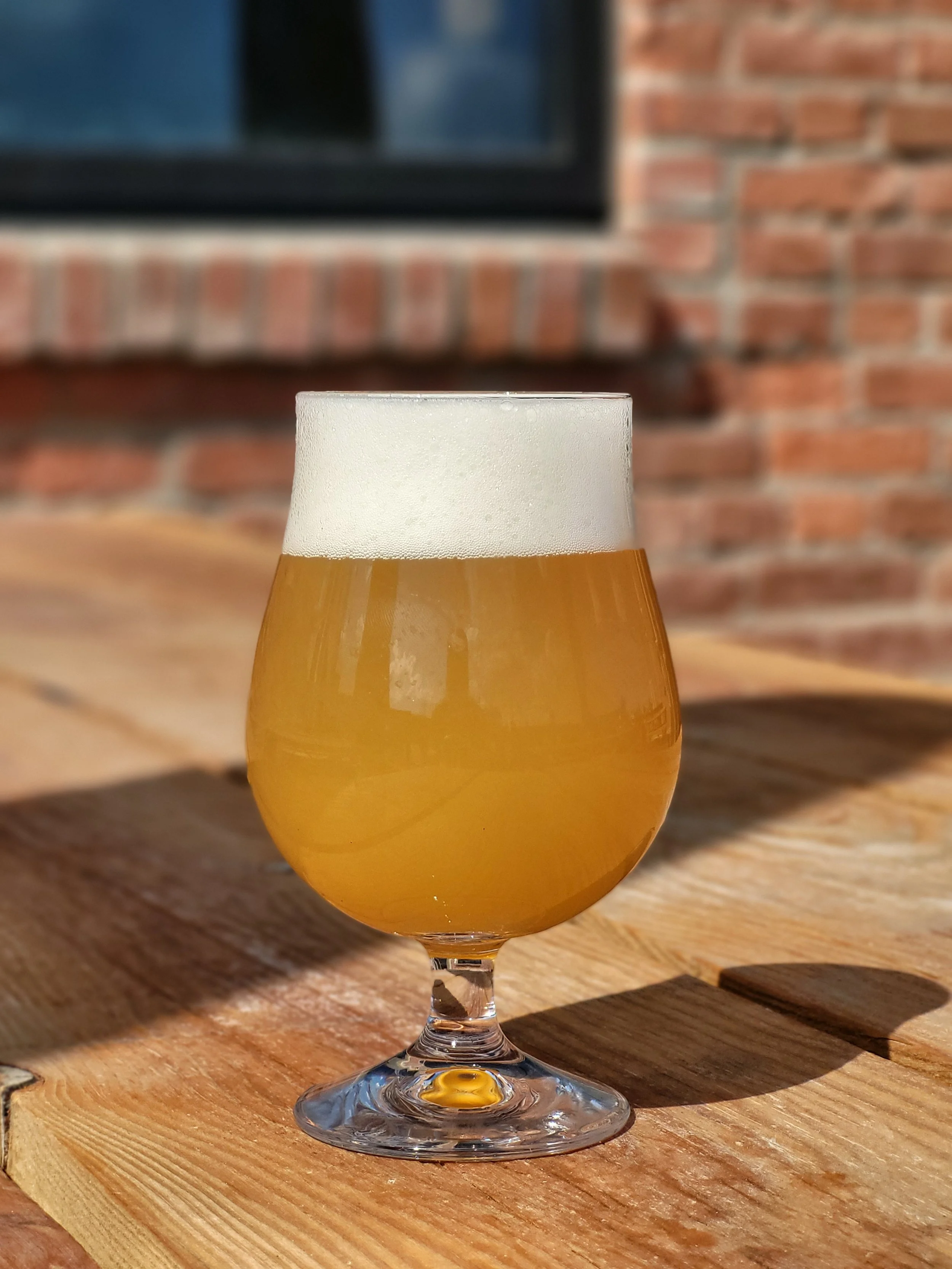
A hazy IPA. But where did it come from?
Dear Reader,
Before he became one of history’s most famous Christian saints, Augustine of Hippo knelt in a walled garden and offered one of the most self-aware and relatable prayers in history: Make me chaste and celibate - but not yet.
He later explained why: For I was afraid that You would hear me too soon, and too soon cure me of the disease of lust, which I wished to satisfy rather than extinguish (Book VIII: 7).
History has judged Augustine kindly, 1,600 years later. Perhaps you, too, dear reader, will forgive us the indulgence of this hazy IPA. For like Augustine, we have an understandable reason.
The hazy IPA will become part of a nine-beer series exploring how IPA has evolved over the past 270 years.
The India Pale Ale first sailed from London to Calcutta in 1753. This strong, hoppy ale crossed the tropics twice, and then rode the monsoon winds across the Southern Ocean before sliding into port. It was a hardy brew. Over 7% alcohol, very dry, and very hoppy. And it would stay that way until the first World War, when, like a species under tremendous strain, it began to evolve.
As with evolution, it wasn’t the best or the strongest that passed on their genes. It was those that simply didn’t die who carried the torch. The Great War reduced IPA to 4% alc/vol, and in the post-war period it morphed into a lager-adjacent style wholly unrecognisable from its ancestors.
But the memory of what IPA used to be remained.
The fledgling craft beer movement of the 1990s made the North American west coast a kind of Jurassic Park for beer. Old styles filled pints once more. They were a bit different from the originals, but still strong, hoppy, clear, and confident. They were, like the IPAs of the style’s Heroic Age, a style that stood apart for its assertive flavour.
But not everyone liked the aggressive hoppiness imparted by the flowers of the wolf vine (humulus lupulus, the Latin name for hops). And so, like dogs, the bitter IPA was domesticated.
Domesticated mammals, like dogs, look different from their ancestors. For one, they often have patches of white fur on their faces, paws, and tail tips. Selective breeding for reduced aggression slightly alters the development of neural crest cells during embryonic development, affecting pigment-producing melanocytes and resulting in patches of white fur.
Domesticated IPAs also look different from their ancestors. They're hazy. Brewers chasing softer bitterness and juicy hop character use protein-rich grains and huge late hop additions. The proteins bind with hop polyphenols to create a permanent haze. That fuller body softens bitterness, while the cloudy appearance fruity flavour descriptions helps prime our brains to expect juice before we've even taken a sip.
Domesticated dogs don’t (usually) bite. And neither should domesticated IPAs.
But how did we get here? Did someone invent the hazy IPA as a way to stand out from their competition?
No.
Like most discoveries it was an accident. But it caught on. And then people ran with it.
For this week’s Time Machine, we don’t need to dive into scanned archives of centuries old texts. We only need to step back a couple decades, to a time right before smartphones, so we can explore the evolution of craft beer’s favourite pet: the hazy IPA.
The Evolution of Hazy IPA
It’s taken a week longer than normal. Why isn’t it clear yet?
Does it taste fine?
Sure, but look at it!
Let’s package it anyway. We have orders to fill.
Around the turn of the millennium, a new mutation had just been spotted in the IPA genome. It appeared while brewers in Vermont were experimenting with an emerging technique called dry hopping.
Instead of restricting hops to the brew kettle, they added enormous quantities during and after fermentation.
The aroma and flavour of hops come from volatile oils that disappear quickly when they’re heated. They also get thrown out of beer along with the churning, bubbling chaos of fermentation. Adding hops to cold, still, fermented beer preserved more of the delicate oils that smelled of grapefruit, peach and pine.
Brewers had experimented with dry hopping centuries earlier in export beers, but this was for their antimicrobial, preservative effect. Not flavour. When these beers were finally poured months later, they were often clear.
But in the early 2000s, brewers were eager to showcase new breeds of hops with big, fruity profiles unavailable to earlier generations. They dialled back the bitterness and went for a milder, fruiter hop palate. But when their dry hopped beers should have been ready to go out for sale, they found a surprising side-effect. Heavy dry hopping, combined with protein-rich grains, resulted in beers that refused to clarify on schedule. Proteins from the malt bound with tannin-like compounds called hop polyphenols to form microscopic particles. These remained suspended in the beer, creating a haze that lasted for months.
At the time, clarity was a sign of quality. So, brewers were faced with a choice. They could filter the beer to make it clear, removing some of the delicate aromas they just worked hard to capture. Or, they could leave it as it is, tasty, but cloudy.
Some brewers, like John Kimmich at The Alchemist, kept it cloudy. They gambled that people would love the soft bitterness and fuller body that enhanced the impression of fresh tropical fruit, despite the haze. When Heady Topper appeared in 2003, few realised they were looking at the first member of an entirely new branch of the IPA family tree.
Drinkers didn’t mind the haze. The loved it. Soon they were lining up outside The Alchemist for a beer that looked unfinished but tasted unlike anything they had encountered before. Other Vermont breweries, including Hill Farmstead and Lawson's Finest Liquids, began exploring the same territory. They weren't simply copying Heady Topper; they were selecting for the same traits: explosive hop aroma, restrained bitterness, pillowy body and, increasingly, the haze itself.
The mutation had found an environment where it could thrive.
Other brewers caught on to the trend and tried their own innovations, like adding oats, wheat, and other high-protein grains to make their beers even cloudier.
Haze was no longer a by-product. It had become a defining trait of the new style.
And the timing was perfect for this new, hop aroma-forward ale.
The environment was changing in a way that favoured a cloudy style like never before. Hop breeders released dozens of new varieties with explosive tropical fruit aromas: Citra, Mosaic, Galaxy and many others. Brewers suddenly had the raw material to push the style even further. Farmers ripped out older cultivars in favour of these new varieties, which often sold out before harvest. Consumers began asking for hops like Citra by name.
Then, suddenly, a new social epoch began.
The smartphone arrived.
The smartphone apps Instagram and Untappd transformed the craft beer landscape during the 2010s just as craft was going mainstream. Hazy IPAs were instantly recognisable in a photograph. And photographs were everywhere.
The glowing orange colour and juice-like opacity of the hazy IPA stood out from other brews. Beer rating apps like Untappd captured consumers’ enthusiasm and the haze trend pushed this new style to the top of the open-sourced ratings charts. In the world of the smartphone, traits that attracted attention reproduced. Those that didn't gradually faded away.
The hazy IPA was a new style, perfectly suited for the new social media environment.
By the middle of the 2010s, speciation was complete. A new species had emerged just as the beer and media landscapes were changing to suit it. The haze craze spread across North America and beyond. It wasn’t long before the intial regional name North-East IPA (NEIPA) would give way to simply “Hazy IPA.”
Today, hazy IPA is the dominant craft beer style. But evolution is never finished. Somewhere, perhaps in a small brewery few people have yet heard of, another mutation is quietly taking shape.
Or perhaps the next revolution won't be something new at all. Perhaps, like a wolf returning from the dark woods to find a landscape full of domesticated dogs, an old style is waiting for the right moment to assert itself anew.