
Les Ouvrières - Grisette
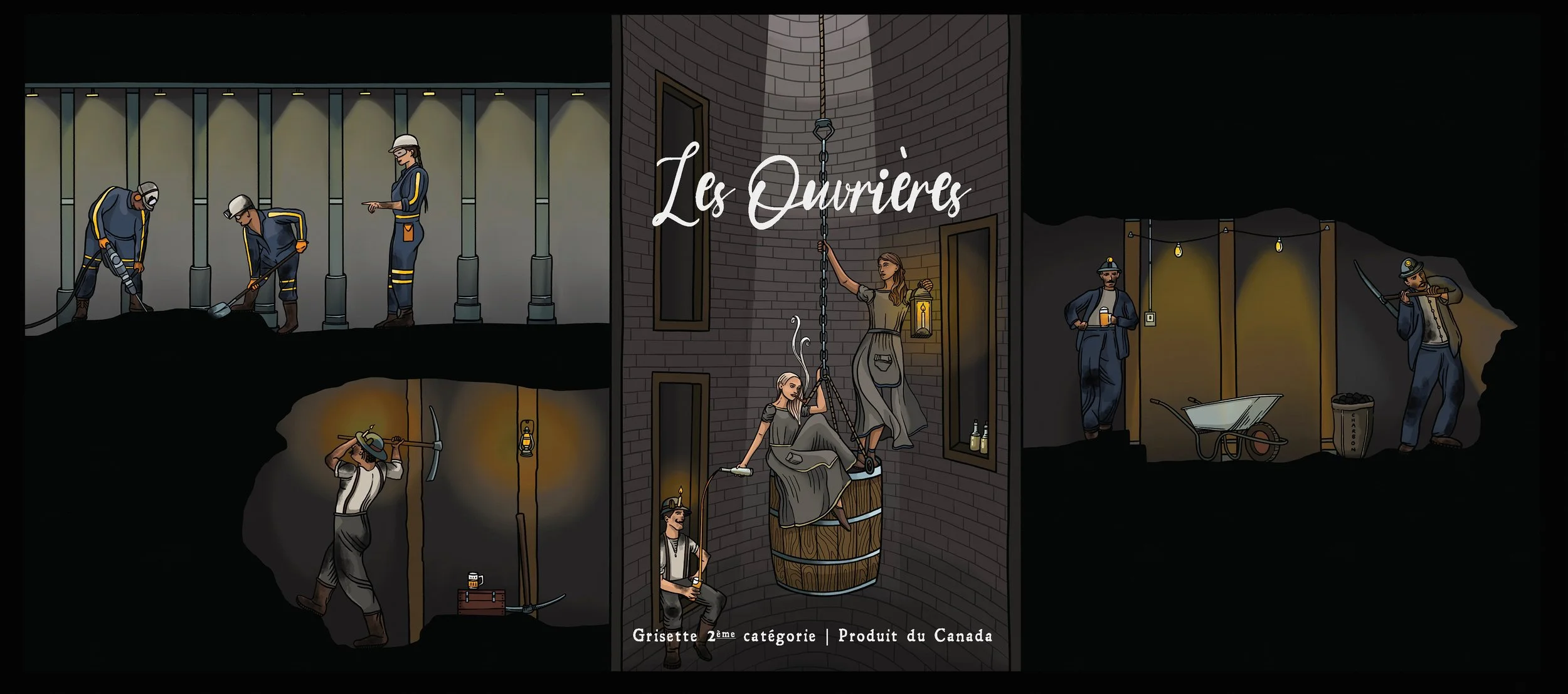
Grisette: The Women Behind the Name
A new class of woman emerged among the soot and noise of the Industrial Revolution. These were the grisettes.
The term grisette, a French diminutive meaning “the grey one,” came from their simple grey dresses. Grisettes left the countryside to find work and start a new life during the great urban migration of the 1700s and 1800s. They were among the first women to seek work outside the home and found it in the rough mining towns of Hainaut, southern Belgium.
These women worked hard as seamstresses, shop assistants, labourers, and servers in the working-class pubs frequented by coal miners. Among the first women to work outside the home, and even to live independently from their families, they were controversial figures. Our Grisette ale, called Les Ouvrières (The Workers), is named after them.
From Working Class Woman to Bohemian Ideal
By the mid-to-late 1800s, the meaning of grisette began to shift. The association with rough mining towns in Hainaut fell away and was replaced with the Bohemian culture of Paris. The new meaning of grisette separated from the woman labourers and connected itself to the ideal of an independent woman who was literate, socially mobile, and connected to the arts. The image of grisette was no longer one of working-class toil in shop or pub, but of a romantically mysterious woman working as a model for painters and moving within creative circles.
In reality, grisettes were both. The majority of working-class women filled the majority of available jobs, and these were the same as they had been. Some, though, did find more romantic work in the arts and it was these woman, or rather romanticised ideas about them, that carried the term grisette through the end of the 19th century.
Grisettes occupied a strange middle ground in a shifting society. Mostly working-class, but flirting with the fringes of the artistic side of upper-class society, they represented a kind of transition, women stepping outside traditional roles in search of independence, identity, and opportunity.
That independence made them fascinating. And controversial. In a conservative society, grisettes were both admired and criticized. They were seen as free-spirited, charming, and modern, but also judged harshly for stepping beyond traditional norms.
Myth, Reality, and Cultural Projection
Because of this tension, grisettes became as much a cultural idea as a real group of people. They were romanticized in literature and art, often portrayed as beautiful, carefree, and delightfully rebellious.
Mark Twain, writing during his travels in France, shows the disappointment that men of his class sometimes experienced when they discovered that everyday people rarely live up to idealized myth. His writing captures the gap between expectation and observation, between the idealized grisette and the real women who did not live up to his fantasy. He expected that;
They were (if you let the books of travel tell it) always so beautiful - so neat and trim, so graceful - so naive and trusting - so gentle, so winning - so faithful to their shop duties… so lighthearted and happy on their Sunday picnics in the suburbs - and oh, so charmingly, so delightfully immoral!
But once in Paris found that,
They were like nearly all the Frenchwomen I ever saw - homely… large hands, large feet… not winning…
This contradiction gets to the heart of the grisette. They certainly didn’t all plod around like ogresses with large hands and feet. Rather, they were regular people, judged harshly at times for not being ideal, and at other times for being different. The grisette was, culturally speaking, a whirlpool of expectations. Exotic and romantic, basic and haggard, or in reality, normal people in their normal variations trying to make their way in the world that didn’t yet have a place for them.
Our Interpretation and Label
For this label, we wanted to bring the focus back from the beer to the human stories that played out around it.
Yes, coal mining is part of the background. It’s in the industrial setting, the grit, the environment. But we also wanted to capture the soul of the grisette. The tension between labour and aspiration, and the movement toward culture, art, and self-expression.
We also wanted to portray the internal struggle these women would have faced. We did this by framing the label around two subjects, each representing a different part of the self. The intellectual self stands strong and confident, looking to the future. She carries a flame on behalf of generations to come as she looks upward and toward the future. There, in the background, a woman mining engineer directs men at work.
The emotional self sits downcast, seeking distraction from mental strain in physical pleasure (smoking). She slumps, pouring beer for a coal miner who sits below her in the receding dark. She is passive, in strong contrast to the active and assertive version of herself standing above.
The story of Grisette isn’t just about a beer for coal miners. And it’s not cliché about a romanticized figure from the past. It’s a story about real people who took a risk not knowing how it would turn out.
The Beer
The beer style grisette takes its name from these women. At the same time, it recalls the setting of their day. The grey stone of mining towns and the drab, coal-clotted streets of the Industrial Revolution that made grey the colour of urban life.
Like the spirit of the grisettes, perhaps, the drink provides a sharp contrast to its dull surroundings. Pale golden, light, and effervescent, it’s a kind of sunlight in a glass. The opposite of an industrial pub, subterranean mine, or coal smudged city. Today, as in centuries past, we can enjoy it after a hard day’s work. So, let’s raise a glass and toast to the memory of the workers of the Industrial Revolution whose strivings led to a better life for us all. Cheers.